

A Life on the Water
by Jennifer Stewart Kornegay
November 24, 2026

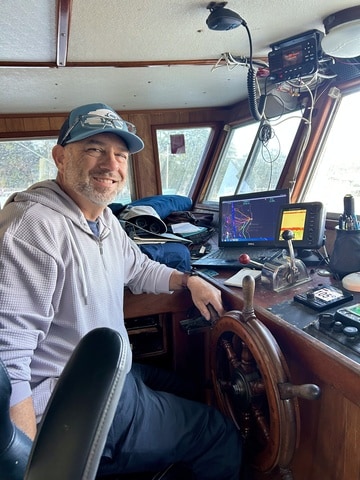
At 3:05 a.m., Patrick Gormandy’s alarm goes off, pulling him from sleep so he can begin his day chasing shrimp. He drives to his boat, the Captain Sam B, which is waiting at Fairhope Docks Marina. He and his crew member load ice onto the boat before checking the main engines, generators and other tools and equipment essential to their work.
Once they complete their inspections and untie the lines tethering them to the dock, Gormandy drives his boat an hour and a half to two hours out into Mobile Bay. When he reaches the Mobile Ship Channel, usually right around first light, he begins trawling, dragging his nets behind the boat and hoping they’re filling with shrimp.
He watches purple lines and blue X marks on his laptop screen as he navigates the channel, avoiding the X’s, which mark underwater obstructions.
“It’s kind of a minefield,” he says.
He first trawls along the channel’s edges, but as the hours pass and the sun shines brighter, he maneuvers his boat and nets into the middle, where the channel reaches its deepest point at 55 feet.
“With the higher sun on the water, the shrimp head down to hide from predators, so we follow them down,” he says.
As the nets fill, Gormandy manages his catch carefully.
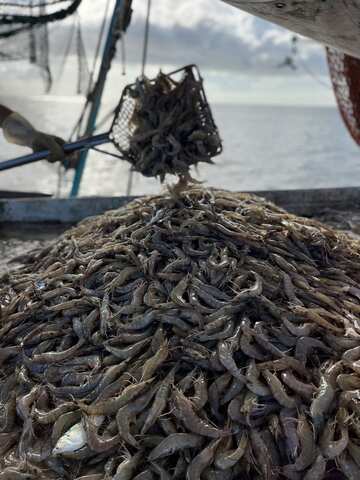
“We like to bring in anywhere from 200 to 400 pounds at a time,” he says. “We try to cut our time short as far as how long we trawl, usually about an hour. That way, we’re not dragging stuff around too long, because the longer the shrimp stay in the bag with all the water pressure, they don’t look as good, and we want to keep them pretty.”
Each time he pulls in his nets, the haul ends up on the boat’s sorting table. The shrimp then go into a large box on the deck, sandwiched between layers of ice where they stay chilled as Gormandy makes additional trawling passes.
He may drive back and forth in the same area for a while or move to a new spot. He goes wherever the big shrimp are because that’s what his customers want.
If You Catch It, They Will Come
As he steers the Captain Sam B back to land, Gormandy posts on the Heritage Seafood – Captain Sam B Facebook page, letting his followers know he’s coming home with shrimp. His customers line up in the marina’s parking lot, and when their turn comes, they buy the shrimp right off the boat. These transactions repeat until the line is gone or every shrimp is sold, whichever happens first.
Gormandy explains the appeal that has Fairhope residents clamoring for his product.
“Our shrimp are caught fresh every day. Nothing has been done to them or added,” he says. “The only thing they get is some ice. It’s clean, organic food, and they know exactly where it came from and how it was handled.”
According to Gormandy, selling directly to customers is the only way to survive as a small shrimper today.
“The number of those in commercial shrimping decreases every year,” he says. “Unless you are one of the big Gulf boat operations, the only way to make it today as a dayboat shrimper — what I am — is to build a retail clientele.”
That’s exactly what he’s done. His Facebook page boasts more than 8,000 followers, and Gormandy needs 1,000 pounds of shrimp before he’ll make a post announcing he’s open for business.
“We don’t do orders; it’s a first-come, first-served operation,” he says. “And I usually sell out.”
When a day’s yield is less than 1,000 pounds, he turns it over to a man he’s hired to sell the shrimp through his Heritage Seafood market.
“I have so many loyal, repeat customers, if I post and bring people to the marina and only have 600 pounds, I will run out quickly, and a lot of folks are gonna leave disappointed,” he says. “I never want that.”

All Year Long
How long it takes to hit the sought-after 1,000-pound mark or even catch a smaller amount varies, meaning no day is ever the same for Gormandy.
“Sometimes it takes until dark,” he says. “Sometimes you don’t get there at all, but any day is easily gonna be a 12-hour day, maybe a 14- or 16-hour day.”
He likes to joke that he only works half days.
“I mean, 12 hours is technically half a day,” he says.
He follows this routine as often as weather permits during peak shrimping season, which runs from June to just before Christmas. During summer, thanks to longer stretches of calmer weather, Gormandy might trawl six days a week.
“You gotta go out as much as you can when you can,” he says.
As the season stretches into fall, however, there are days when the Captain Sam B’s engines stay silent.
“Especially now as we approach the holidays, we get cold fronts and days we can’t go out due to weather,” he says.
Shrimping three days a week in late autumn is great, but some weeks, he must make do with a single day on the water.
And when shrimping season is over, Gormandy’s work isn’t done. He spends the offseason cleaning, repairing and sometimes refurbishing his 1989 boat, which was custom-made for its task.
“It was made in someone’s backyard in Louisiana and was designed exclusively for shrimping,” he says.
Last year, he stripped all the boat’s rigging down to bare metal and replaced some areas suffering from salt corrosion before priming and repainting everything. This year, the boat goes into dry dock to get a fresh coat of paint on its hull and sides.
“It’s another full-time job, doing basic maintenance and making needed fixes after you work things so hard during season,” he says.
Digging the Daily Grind
About seven months on the water and five months off — this schedule has defined Gormandy’s life since he started shrimping full time nine years ago. But he didn’t start from scratch.
“I was born and raised doing this with my dad,” he says. “And my granddad, who the boat is named after, owned a small fishing camp on the causeway. So, the bay and seafood are in my blood.”
While Gormandy initially chose different work, holding a management position in the casino industry for a while, the water eventually called him back. When his dad retired, he bought the Sam B from him, a choice he “blames” on his wife.
“We actually met on this boat, so when my dad got ready to sell it, she couldn’t stand to see it go,” he says. “She was like, ‘You love the water. You love shrimping. You’re good at it, and it makes you happy, so why don’t we invest in ourselves and start a shrimping business?’ So, it was her fault we did this,” Gormandy jokes.
Some days aren’t so funny. The path isn’t easy. But despite the hardships — high gas prices among them — he’s grateful for his daily grind. Every morning renews his appreciation.
“I love the view I get every time I go out; we have some of the most beautiful sunrises in the world,” Gormandy says. “And it’s fun to catch shrimp.”
But the relationships he’s forged with customers fuel his affection for the shrimping life most.
“They know my name, and I know them, too,” Gormandy says. “It means something to me to know the fruits of my labor are feeding them and their families good, healthy food.”
The views and opinions expressed in this blog are those of the authors and do not necessarily reflect the views or positions of Sweet Grown Alabama.