

It Always Comes Back to Oysters
by Jennifer Stewart Kornegay
July 28, 2026

Almost every day, Chris Nelson, president of Bon Secour Fisheries, learns something new about the seafood his company sells.
"All the different critters we deal with, how and where they grow, where and when they're found and caught — all of that intrigues me," he said.
The opportunity for continuous learning aligns with Nelson's background, which includes a master's degree in biological oceanography, a Sea Grant fellowship and a position with the National Fisheries Institute before he joined his family's 134-year-old business in 1989.
Although he left the marine science field behind, he brought his curiosity with him. That lifelong passion for learning keeps him motivated as he navigates the challenges of the seafood industry.
So does the knowledge that his great-grandfather, grandfather and father each faced — and overcame — challenges of their own. During more than a century of operation, Bon Secour Fisheries has ebbed, flowed and evolved alongside the ever-changing tides of the seafood industry.

The Bon Secour Fisheries story began in 1892, when Frank Nelson, a Danish immigrant, started growing oysters in Bon Secour Bay before harvesting them and selling them in Mobile.
"He would either buy small oysters from harvesters who collected them from public reefs or gather them himself and scatter them across the bay bottom, allowing them to grow before harvesting them," Nelson said.
Frank's son later joined the business, followed by his grandson, John Ray Nelson, Chris Nelson's father. For decades, the company grew in size while operating under the same model of growing, packing and selling oysters.
"The environment in the bay supported that through the 1950s and into the early 1960s," Nelson said. "But then something — or, more likely, several things — changed, and the number of oysters my family could grow steadily declined."
Eventually, the decline forced the family out of the oyster-growing business.
"The company then became reliant on sourcing and processing oysters from Texas and Louisiana, primarily Louisiana," Nelson said. "A small number were still purchased from Alabama waters."

As Bon Secour Fisheries transitioned to sourcing out-of-state oysters to meet demand, another opportunity emerged. Improvements in boats and trawling technology gave shrimpers greater access to large offshore shrimp populations in the Gulf, fueling a shrimping boom.
"From the 1960s through the 1970s and into the 1980s, the Gulf produced an abundance of shrimp, with shrimpers bringing in huge catches," Nelson said.
Shrimp soon became Bon Secour Fisheries' top-selling product. But the industry shifted again in the mid-1980s, when farm-raised shrimp from overseas flooded the market and drove down prices. At the same time, environmental regulations made it more difficult for domestic shrimpers to operate.
"There were concerns — and there still are — about shrimp nets catching more than shrimp, including sea turtles and other threatened and endangered species," Nelson said. "Taken together, those factors hampered the industry."
To adapt, Bon Secour Fisheries looked to its roots.
"We turned our focus once more to oysters," Nelson said.
The transition from a shrimp business that also handled oysters to a company focused primarily on oyster processing has not been without challenges. But Bon Secour Fisheries has overcome obstacles before, and that history gives Nelson confidence about the future.
Today, the company sources as much local and regional seafood as possible, positioning itself as a specialty producer and distributor of Gulf and Southeastern seafood. Its Nelson's Brand Gulf Oysters — sold live, in the shell and shucked — are now its flagship product. Bon Secour Fisheries sells directly to restaurants as well as food-service distributors that supply restaurants.
"Each market accounts for about half our business," Nelson said.
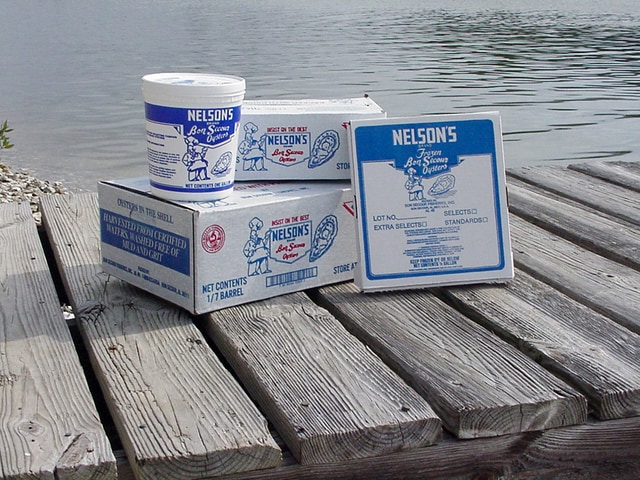
Most of Bon Secour Fisheries' oysters still come from Louisiana and Texas. They arrive at the company's processing plant on the banks of the Bon Secour River aboard its fleet of refrigerated trucks, where they are processed, packed and distributed.
The company's product line also includes head-on, headless, peeled, and peeled-and-deveined shrimp — including the Gulf's prized Royal Reds — as well as non-Gulf shrimp and other seafood restaurants demand, such as snow crab and salmon. Bon Secour Fisheries also sells a smaller volume of seafood to retail outlets, including grocery stores and fish markets.
While shrimp remains an important part of the business, oysters hold Nelson's greatest affection.
"I especially love the oyster side of the business," he said. "That animal fascinates me."
His passion has fueled his support for Alabama's growing off-bottom oyster farming industry and even inspired him to try oyster farming himself in the 1990s.
"When I joined the business, my dream was to grow oysters in the bay," Nelson said.
He proved it could be done, but the economics did not work at the time.
"The techniques to do it successfully here weren't well developed yet," he said. "But they are now, and I'm proud that we provide farm-raised oysters. I want to promote that part of the oyster industry. It's sustainable and produces an outstanding oyster."
Today, Bon Secour Fisheries supplies local seafood and products from around the world to more than 200 customers. Even as the company has expanded, Nelson said its commitment to freshness, quality and customer service remains rooted in its family heritage.
"We're still a family company. My brother, David, is executive vice president," he said. "Many things have changed over the long time the Nelson family has been doing this, but our attention to detail and dedication to treating our customers right have not."